 Veterinary Association of ZambiaIn partnership with AFSCAN
A USD 3,300 award from the African Small Companion Animal Network will vaccinate 1,000 dogs and cats in Luapula Province. It began with a proposal written by members. Yours could be next.
Lusaka, 26 November 2026
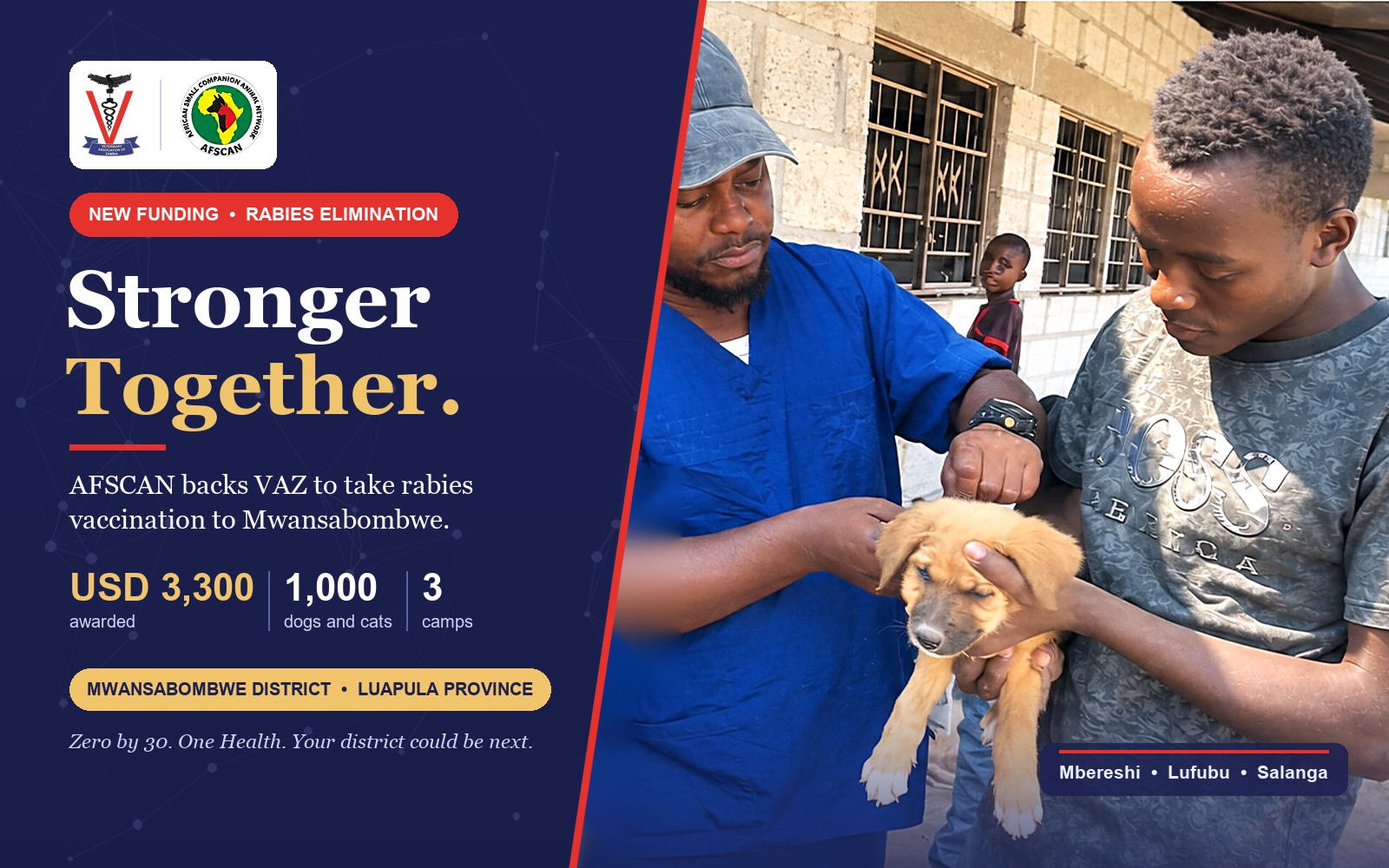
The Veterinary Association of Zambia (VAZ) has secured USD 3,300 from the African Small Companion Animal Network (AFSCAN) to fund the Mwansabombwe District Rabies Vaccination Campaign in Luapula Province. The award follows a proposal submitted by the Association and approved by the AFSCAN Board.
The campaign will vaccinate 1,000 dogs and cats across three veterinary camps, Mbereshi, Lufubu and Salanga, and take rabies education into the communities where the risk is greatest. Every dose is costed in full: the award vaccinates one animal for about USD 3.30, all costs included.
Stronger Together, beyond one day
The award speaks directly to the 2026 World Rabies Day theme, Stronger Together: the conviction that no single organisation can end rabies alone, but partners working as one can.
World Rabies Day falls on 28 September, but rabies does not keep a calendar. Ending it takes sustained commitment, resources and coordinated action from veterinarians, government, communities, health workers and international partners. This partnership shows how a global commitment becomes vaccine in a dog's shoulder in a Luapula village.
What the campaign will deliver
Who is making it happen
The campaign is coordinated by Noah's Ark Veterinary Services in collaboration with VAZ and the District Veterinary Office. It brings in the Ministry of Health, the Department of National Parks and Wildlife, the local authority, the Zambia Police and the traditional leadership of Paramount Chief Mwata Kazembe: a true One Health team, from the palace to the clinic.
VAZ will account for every dollar, with a full narrative and financial report to AFSCAN supported by the vaccination register and camp-level coverage against the 1,000-animal target.
Why it matters. Rabies is 100% preventable, yet it still kills people in Zambia, many of them children bitten by unvaccinated dogs. Vaccinating at least 70% of dogs in a community breaks the chain of transmission. That is why this campaign advances both the One Health approach and the global Zero by 30 goal: no human deaths from dog-mediated rabies by 2030.
Your turn to lead
This award did not arrive by chance. It came because colleagues identified a need in their district, built a costed plan with local partners and put it on paper. Mwansabombwe follows the Mwandi campaign in Western Province, where partners vaccinated about 3,800 dogs and cats by World Rabies Day. Rabies elimination in Zambia will be won district by district, and every district needs a veterinarian willing to go first.
- Spot the gapWhich community in your area has low dog vaccination coverage or recent bite cases?
- Build the teamBring in your District Veterinary Office, health facility, council and traditional leaders.
- Cost it and write itSet a clear target and an honest budget. Small, well-costed proposals win.
- Talk to the SecretariatShare your idea with the VAZ Secretariat and let us explore it together.
The Veterinary Association of Zambia sincerely thanks the AFSCAN Board for its financial support and its commitment to rabies prevention and control in Zambia, and every partner in Mwansabombwe who will carry this work to the community.
Stronger Together in action. Stronger Together against rabies.
Dr Catherine Mutale
Honorary Secretary, Veterinary Association of Zambia
secretary@vaz.org.zm
About AFSCAN: the African Small Companion Animal Network, part of the WSAVA Foundation, supports veterinary associations across Africa to improve the health and welfare of small companion animals, including rabies control.